Understanding Selective Mutism in Black Girls: A Guide for Parents and Educators
Psychology for Black Girls ·
She Talks at Home but Not at School
At home, she may be a chatterbox, sharing stories and laughter with her family. However, in school, her voice may seem to vanish. Adults might misinterpret her silence as shyness or stubbornness, believing she simply needs encouragement to speak up. Yet, when a child communicates comfortably in some settings but struggles to do so in others, selective mutism should be considered.
Selective mutism is an anxiety disorder where a child capable of speaking finds it persistently difficult to communicate in specific social situations. This silence is not a choice; rather, anxiety can make speaking feel physically challenging or even impossible.

A child expressing herself comfortably at home.
Recognizing the Signs of Selective Mutism
Selective mutism does not mean a child never speaks at school. Signs may include:
Speaking freely at home but remaining silent at school
Communicating with one trusted friend but not with teachers
Whispering instead of speaking at a normal volume
Nodding, pointing, gesturing, or writing instead of verbalizing
Freezing when asked a direct question
Avoiding ordering food or speaking to unfamiliar adults
Struggling to say her name when called upon
Feeling comfortable speaking in small groups but shutting down in larger ones
Avoiding requests for help, even when needed
Becoming visibly tense when expected to speak
Some children may eventually speak after becoming comfortable in a setting or with a person, while others may communicate freely outside of school but remain silent during the school day.
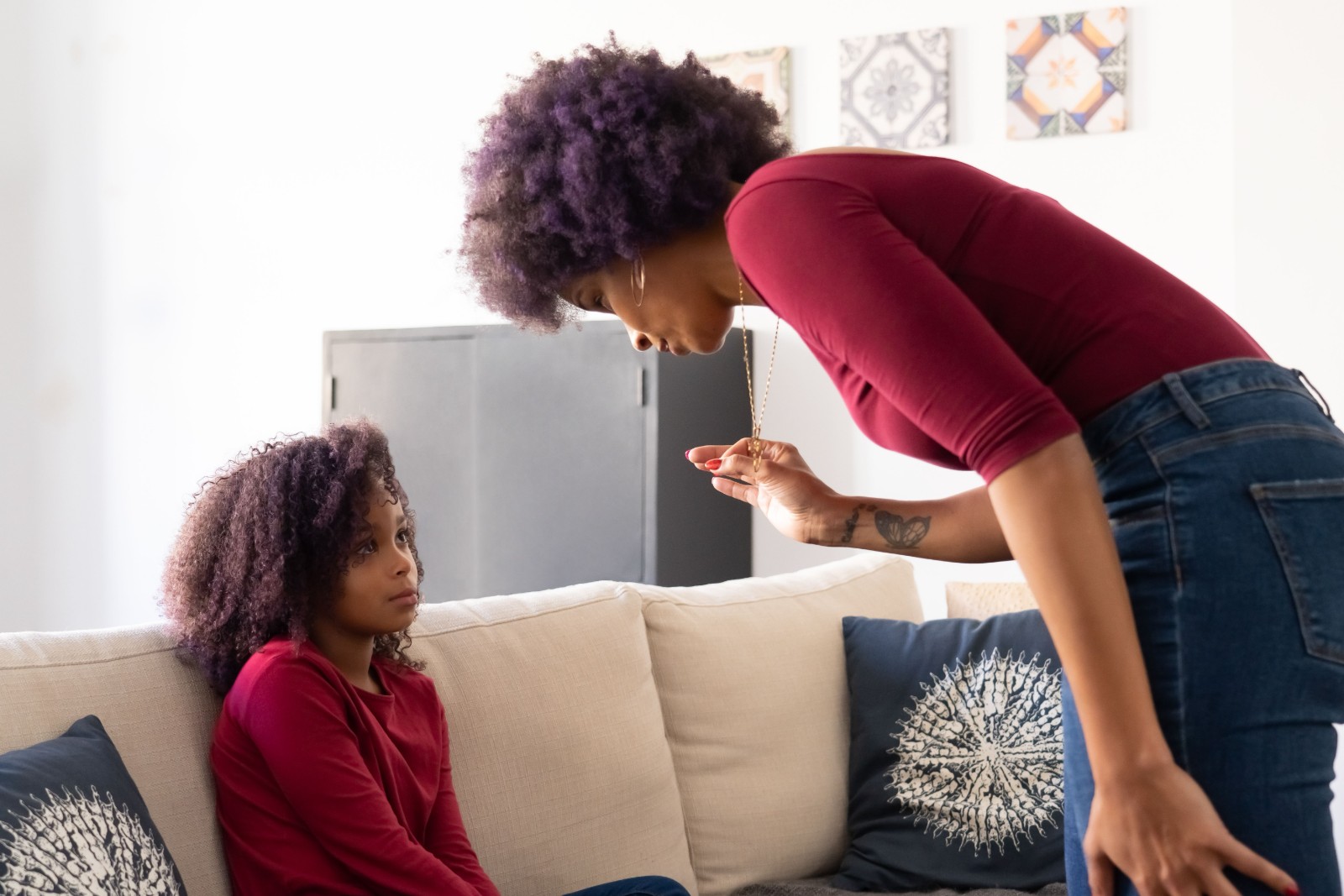
A child feeling anxious in a school setting.
Understanding the Difference Between Shyness and Selective Mutism
Shyness is common, especially in new environments. A shy child may hesitate to speak initially but typically warms up over time. In contrast, a child with selective mutism may continue to struggle with speaking even after becoming familiar with her surroundings and peers.
She may know exactly what she wants to say and even rehearse it silently. However, when attention shifts to her, anxiety can cause her to freeze. Pressuring her to speak or repeatedly asking her to respond can heighten this anxiety, making communication even more challenging.
Why Selective Mutism Can Go Unnoticed
Quiet children often do not raise alarms. A girl who follows directions, completes her assignments, and remains non-disruptive may be viewed as an ideal student. Her silence might be mistaken for politeness or a reserved personality.
For Black girls, there can be additional misunderstandings. A child who does not respond to an adult may be perceived as disrespectful rather than anxious. In some cases, her quiet demeanor may lead to her receiving little attention simply because she is not causing behavioral issues.
This is why the difference in her communication across settings is crucial. If she is expressive at home but consistently silent in school or other social situations, this pattern warrants further investigation.
Factors That Can Intensify Speaking Difficulties
Selective mutism often coexists with social anxiety, but each child's experience is unique. Speaking may become particularly challenging when a girl is:
Being observed by multiple people
Asked unexpected questions
Expected to read aloud
Interacting with unfamiliar adults
Transitioning to a new classroom or activity
Worried about making mistakes
Concerned that others will notice her voice
Uncertain about how her words will be received
Once labeled as “the girl who does not talk,” the pressure to speak can increase, making it even more daunting. Comments like “She finally talked!”—though well-meaning—can heighten anxiety about speaking again.
Supporting Children with Selective Mutism
The goal is not to force speech but to reduce anxiety and create a safer environment for communication. Parents and educators can support children by:
Allowing extra time for responses
Avoiding repeated demands to speak
Accepting gestures, writing, or other forms of communication
Asking questions without intense pressure
Creating opportunities for communication in smaller, comfortable settings
Avoiding discussions about her silence in her presence
Ensuring consistent expectations across home and school
Praising participation naturally, without making it a public event
Progress may start with small steps, such as communicating through gestures, whispering to a trusted person, or speaking in the presence of just one individual before gradually expanding to larger groups.
When to Seek Professional Evaluation
Selective mutism can hinder learning, social interactions, independence, and the ability to express basic needs. An evaluation may be beneficial when a child's speaking difficulties:
Persist beyond the initial adjustment period in a new environment
Interfere with classroom participation
Prevent her from asking for help
Complicate social relationships
Cause significant distress
Occur consistently in certain settings despite normal speech in others
It is essential to explore other potential causes for reduced speech, such as language difficulties, hearing issues, autism, communication disorders, or limited familiarity with the spoken language. A mental health professional experienced in childhood anxiety can help identify contributing factors and recommend appropriate support.
Recognizing That Silence Does Not Equate to Lack of Thoughts
A child with selective mutism may have countless thoughts, opinions, questions, and stories to share. The challenge lies not in finding the words but in accessing them when anxiety takes hold. By acknowledging the difference between unwillingness and anxiety, adults can provide support that alleviates pressure.
With the right interventions, patience, and collaboration among families, schools, and mental health professionals, many children can gradually become more comfortable communicating across various settings. If anxiety or speaking difficulties affect your child at school or in other environments, the Psychology for Black Girls Directory can connect you with culturally responsive mental health professionals who appreciate the significance of culture, identity, family, and lived experiences.