How to Build Confidence in a Black Girl
Psychology for Black Girls ·
Confidence isn't built by a single powerful speech, but through hundreds of ordinary moments where a girl feels seen, heard, and valued. For a Black girl navigating a world of narrow beauty standards and stereotypes, these moments are especially critical. As a parent or caregiver, you can help her build a strong inner voice that affirms her worth, even when the world tries to question it.
Listen for the Real Story Behind Her Words
A girl may not announce, “My confidence is struggling.” Instead, she might express her feelings in other ways.
“I look weird.”
“My hair never looks right.”
“I’m not smart like the other kids.”
“Nobody wants me there.”
“My teacher doesn’t like me.”
“I don’t care anymore.”
While it’s tempting to immediately reassure her, first, become curious about the story behind the statement. Ask what happened, when she started feeling this way, or if someone said something to her. A comment about her appearance may really be about teasing at school, and a feeling of not being smart could stem from being overlooked in class.
A girl who seems mature still needs patience. A girl who speaks confidently still needs protection.
You can’t address the real concern until you understand what she’s truly trying to tell you. Show her that her feelings are valid and that you’re a safe person to talk to with questions like:
“Tell me what happened before you started feeling this way.”
“I want to understand, not talk you out of your feelings.”
“Did someone make you feel that you did not belong?”
“What do you need from me right now: listening, advice, or help taking action?”
Give Compliments That Go Beyond Appearance
Tell her she is beautiful and let her hear genuine appreciation for her complexion, hair, and style. But don't stop there. A Black girl needs to know that her value is not limited to how attractive or presentable she appears. Notice the way she thinks, recognize her humor, and praise her willingness to try something new.
Instead of only saying, “You are so smart,” be specific. This helps her see that confidence can be rooted in character, effort, and growth, not just in being the best.
“I saw how you kept working even when that assignment became frustrating.”
“You asked such a thoughtful question in that discussion.”
“I love the way you stood up for your friend.”
“You handled that disappointment with so much honesty.”
“You noticed something that everyone else missed.”
Specific praise helps her understand exactly what she did well and builds a foundation of self-worth based on who she is, not just what she accomplishes.
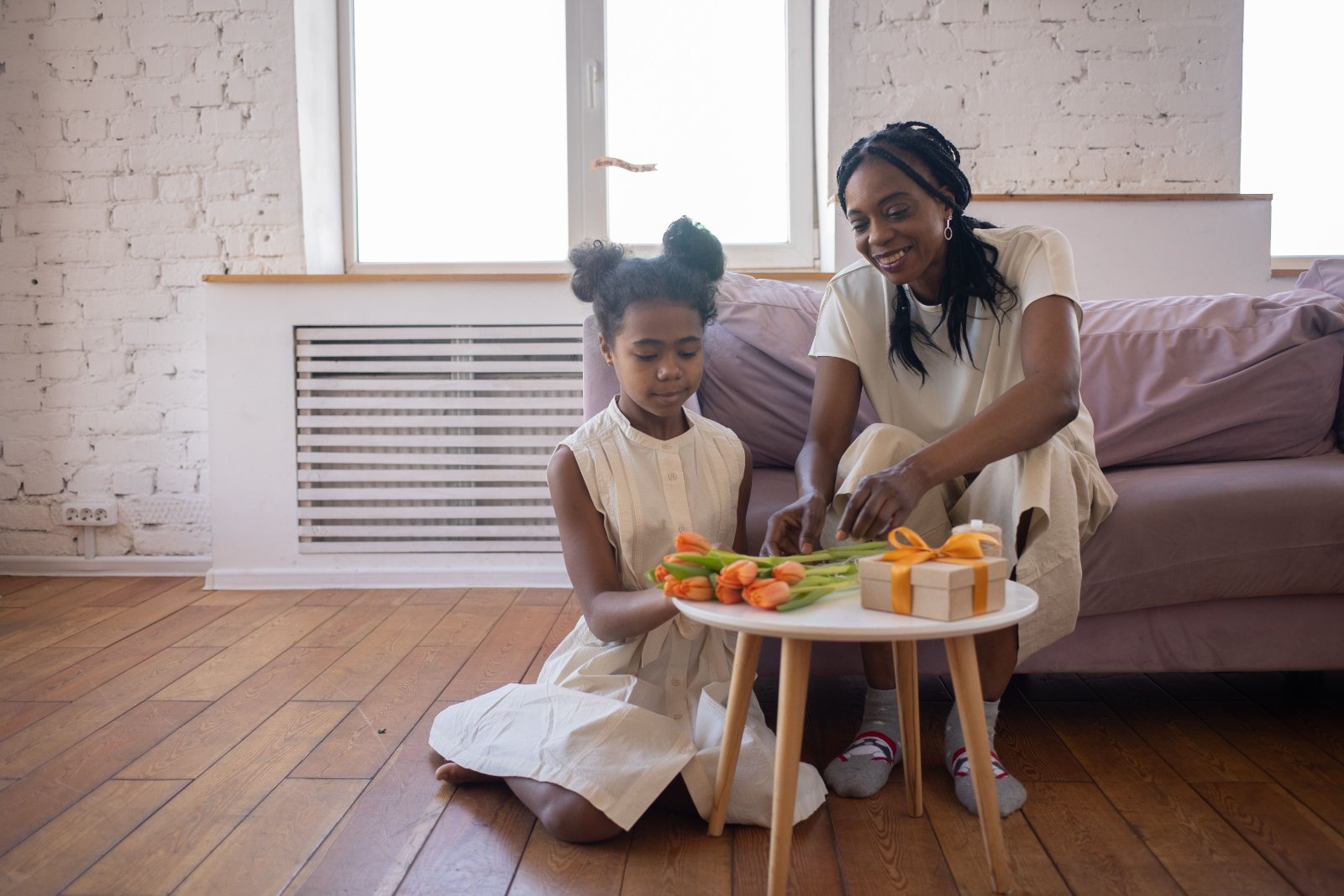
Praise her for qualities like her thoughtfulness, kindness, and persistence.
Help Her Question Harmful Messages
Our girls are surrounded by messages about which faces are beautiful, which voices sound intelligent, and which personalities are acceptable. Some of these messages are so common that she may mistake them for her own beliefs. When she says something harsh about herself, help her investigate where that thought came from.
She does not have to accept every opinion about her as the truth.
The goal isn’t to debate every insecurity, but to teach her that thoughts can be questioned. Ask gentle questions to help her build this skill:
“Who taught you that this part of you was a problem?”
“Would you ever speak to someone you love that way?”
“Is this what you truly believe, or is it something you have heard repeatedly?”
“Are you comparing your everyday life with someone else’s best picture?”
Protect Her Right to Be a Child
Research shows that Black girls are often perceived as older and less innocent than their peers, a phenomenon known as adultification bias. This can lead to them being given less comfort, patience, and protection in schools, communities, and even at home. A girl who seems mature still needs patience, and a girl who speaks confidently still needs protection.
Pay attention to whether she is carrying responsibilities that belong to adults, like managing family conflict or parenting younger siblings. Maturity should not become a reason to withhold tenderness. Let her say, “I don’t know,” ask for help, change her mind, and cry without being told to toughen up. Confidence grows when a girl learns that needing care does not make her less capable.
Give Her Real Choices
Confidence is hard to build when every important decision is made for you. Age-appropriate choices allow a girl to learn what she likes, trust her own judgment, and recover when a decision doesn’t work out as planned. Depending on her age, let her participate in decisions about her hairstyle, hobbies, or how she wants to address a conflict.
This doesn’t mean she controls every rule in the home, but it does mean her preferences are taken seriously. When you disagree with her choice, explain your reasoning rather than dismissing her. She is learning how to make decisions by watching how you respond to hers.

Show her that there is more than one way to be a confident, happy Black girl.
Model the Self-Respect You Want Her to Learn
A girl learns how to treat herself by watching how the trusted adults in her life treat themselves. She hears when you criticize your body, apologize for taking up space, or accept disrespect to avoid conflict. You don’t have to model perfect self-esteem, but you can model self-respect.
Let her see that confidence isn't about loving everything about yourself every day. It's about refusing to treat yourself as worthless, even when you feel uncertain. Try saying things like:
“I made a mistake, but that does not make me a failure.”
“I deserve to be spoken to respectfully.”
“I am still learning how to be kinder to myself.”
“I am proud of what I accomplished today.”
Take Her Concerns Seriously
Don’t assume every struggle is normal insecurity that she will simply outgrow. Pay closer attention if she regularly insults herself, withdraws from activities she once loved, becomes intensely afraid of mistakes, or seems persistently sad, anxious, or hopeless. A culturally responsive mental health professional can offer a private space to explore these feelings.
Seeking professional support does not mean you failed as a caregiver. It means you are taking her emotional needs seriously and giving her the tools she needs to thrive.
A 7-Day Confidence-Building Challenge
Over the next week, try one of these small actions each day. Repeated consistently, they help create a home where she doesn’t have to earn the right to feel valued.
Ask her opinion and listen without correcting it.
Compliment a quality that has nothing to do with her appearance or achievements.
Share a story about a time you doubted yourself and what helped you move through it.
Let her make one meaningful, age-appropriate choice.
Introduce her to a book, film, or creator featuring Black girls or women positively.
Ask what makes her feel most like herself.
Tell her one thing you genuinely admire about the person she is becoming.
Confidence Is Knowing She Is Safe to Be Herself
A confident Black girl won't always be loud, fearless, or certain. Sometimes, confidence is simply asking a question, walking away from disrespect, admitting she needs help, or trying again after an embarrassment. Your role isn't to ensure she never doubts herself, but to give her a safe place to return when doubt appears.
Remind her that she is worthy before she achieves anything, fixes anything, or proves anything. Then show her, through your everyday actions, that you mean it.