Understanding After-School Restraint Collapse in Your Daughter
Psychology for Black Girls ·
Why Does My Daughter Melt Down After School?
Her teacher says she had a great day. She followed directions, finished her work, and got along with her classmates. Maybe she even earned praise for being helpful and well-behaved. But then she gets home, and everything changes.
Suddenly, her shoes are a problem. Her sister says one thing, and she explodes. You ask her to put away her backpack, and she bursts into tears. She complains about dinner, slams a door, argues over something minor, or seems completely unable to handle one more request.
You may find yourself wondering: If she can control herself all day at school, why does she fall apart with me?
Sometimes the answer is surprisingly simple: she may have spent the entire school day holding herself together.
She May Have Used Up More Energy Than You Realize
Think about everything a child manages during a typical school day:
Listening
Sitting still
Remembering instructions
Transitioning between activities
Waiting their turn
Ignoring distractions
Managing frustration
Navigating friendships
Following classroom rules
Completing work even when tired
Dealing with noise, crowds, corrections, unexpected changes, and people they may not particularly like
For many children, these demands are manageable. For others, getting through them requires tremendous effort. A girl who appears calm at school may be working hard internally to manage anxiety, frustration, sensory discomfort, attention, emotions, or social expectations. By the time she gets home, there may simply be very little capacity left.
Why Does It Happen at Home?
This can feel unfair to parents. You may think, “Why does everyone else get the best version of her while I get this?” But home may be exactly where she feels safe enough to stop working so hard.
That does not mean disrespectful or harmful behavior needs to be ignored. It means the timing of the behavior may tell you something. Imagine holding a heavy bag all day. You can carry it, and you do carry it. But the moment someone tells you that you can finally put it down, you do. For some children, walking through the front door is the emotional equivalent of putting down that bag. The tears, irritability, silence, silliness, arguing, or complete exhaustion may come afterward.
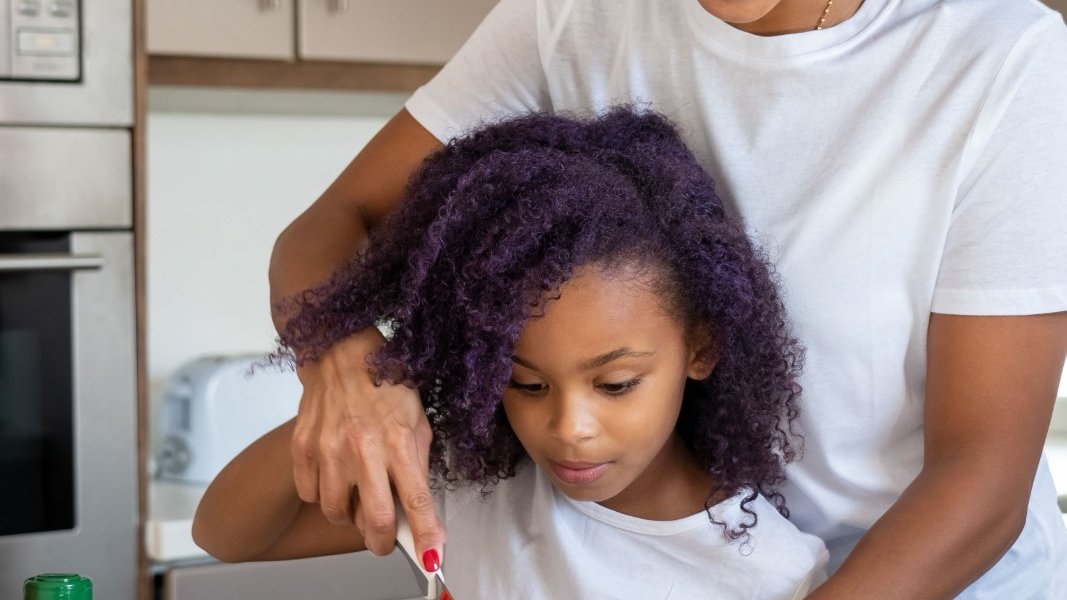
The importance of decompression time.
A Meltdown Is Not Always a Tantrum
Adults sometimes use the words interchangeably, but it can be useful to think about what is happening underneath the behavior. A child having a difficult emotional release may not be calmly choosing a strategy to get something she wants; she may genuinely be overwhelmed.
You might see crying over something that normally wouldn’t bother her, intense irritability, yelling, shutting down, refusing simple requests, wanting everyone to leave her alone, or becoming unusually sensitive to noise and touch. Some children do not explode at all. They disappear into their bedrooms, sleep, become unusually quiet, or put on headphones and do not want anyone talking to them.
The common thread is that the child you see after school may look very different from the child her teacher sees during the day.

Understanding emotional responses at home.
Before You Correct the Behavior, Check the Basics
Sometimes the first intervention is not psychological. It is a snack, a drink, a bathroom break, or twenty quiet minutes. Children may arrive home hungry, thirsty, mentally exhausted, overstimulated, or simply tired from managing a structured environment for several hours.
If the first thing she hears when she walks through the door is:
“How was school?”
“Did you turn in your assignment?”
“Go clean your room.”
“Start your homework.”
“Why do you have an attitude?”
she may be receiving another set of demands before she has recovered from the first set. Try giving her a predictable transition instead. Maybe she comes home, changes clothes, eats something, and has 20 or 30 minutes without questions about homework or chores. For another child, movement may help more than quiet. She may want to walk, dance, shoot basketball, play outside, or simply move around after sitting for much of the day.
There is no single decompression routine that works for every child. The point is to discover what helps your daughter reset.
Ask About Her Day Later
Right after school is not always the best time to investigate what happened during the day. If “How was your day?” repeatedly gets you “fine,” leave it alone for a while. Try again when she is regulated. During dinner, while driving somewhere, or later in the evening, you might ask:
“What took the most energy today?”
“Was there any part of today where you had to work really hard to keep yourself together?”
“When you got home, you seemed completely done with everybody. Was today extra stressful?”
Those questions may tell you more than asking whether she had a good day.
When Everyone Says, “But She's Fine at School”
This is an important piece for parents. Sometimes concerns are dismissed because a child behaves well academically or socially at school. A teacher may genuinely see no problem. That does not necessarily mean nothing is happening.
Children can experience significant internal distress without disrupting a classroom. Some become very skilled at following expectations, staying quiet, watching other children for cues, or hiding when they are confused or overwhelmed. This can be particularly important when a girl is consistently described as mature, responsible, quiet, easy, or no trouble at all. Those can be genuine strengths. But good behavior does not tell you everything about emotional well-being.
A child does not have to become disruptive before adults become curious about how much effort it takes her to get through the day.
When Should Parents Look Deeper?
An occasional rough afternoon is part of being human. The concern grows when the pattern is frequent, intense, getting worse, or interfering with family life. Pay attention if she seems completely depleted after school nearly every day, regularly has severe emotional outbursts, cannot tolerate ordinary interaction after school, has persistent sleep problems, develops frequent headaches or stomachaches, begins dreading school, or takes an unusually long time to recover.
It may also be worth looking deeper if you notice significant anxiety, attention difficulties, sensory sensitivities, learning struggles, social problems, bullying, or major differences between how she functions at home and how she appears elsewhere. Those patterns do not automatically mean she has ADHD, autism, anxiety, or another condition. They mean there may be more to understand.
A pediatrician, psychologist, or other qualified professional can help determine whether the behavior reflects ordinary fatigue and stress or whether additional evaluation and support would be useful.
Home Can Be Safe Without Becoming a Free-for-All
Understanding why a child falls apart does not mean eliminating expectations. She can be overwhelmed and still need to learn that hitting, insulting people, destroying things, or other harmful behavior is not acceptable. The difference is in how you respond.
Instead of treating the entire episode as deliberate misbehavior, help her regulate first. Talk about what happened when she is calm. Then work together on what she can do differently next time. Maybe she needs to tell you:
“I need a few minutes.”
“Can we wait on homework until after snack?”
“I need some space when I first get home.”
Maybe you create a quiet place where she can decompress without being punished for needing it. Regulation and accountability can exist together.
She May Not Be Giving You Her “Worst”
It can hurt when your daughter seems pleasant with everyone else and saves her biggest emotions for home. Try not to interpret that automatically as a sign that she respects other people more than she respects you. Sometimes home is simply the place where she no longer feels she has to perform.
The goal is not to make her hold everything in for another few hours. It is to help her learn how to recognize when she is becoming overwhelmed, communicate what she needs, recover without hurting herself or others, and eventually manage those transitions with greater independence.
So when the teacher says: “She was wonderful today!” and you are standing in the kitchen wondering how you could possibly be talking about the same child, remember: you may both be seeing something real. The more useful question may be: What is it costing her to hold it together all day?
Psychology for Black Girls provides educational resources to help Black girls, women, parents, and families better understand emotional and behavioral health.
If your child's after-school behavior is frequent, severe, or interfering with daily life, consider discussing the pattern with her pediatrician, school team, or a qualified mental health professional.
This article is for educational purposes and does not replace individualized medical, psychological, or educational care.